Choose the right rake for the job

14 October 2026

A rake is one of the simplest tools in the shed, but the wrong one turns an easy job into a hard one. Whether you’re dealing with compacted soil, clearing garden debris or prepping garden beds, choosing the right garden rake matters.

Rakes fall into two broad families: rigid-head rakes (also called bow rakes, ground rakes, soil rakes or gravel rakes) for moving and levelling soil, gravel and mulch, and flexible-head rakes (leaf and lawn rakes) for gathering leaves, grass clippings and light debris without tearing up your lawn.

Everything else – likenail rakes, thatching rakes and shrub rakes, is a specialist variation built for one job. Here’s how to find the right one from the Cyclone rake range to match your job..
Find the right rake for what’s in front of you

Leaves, clippings and light debris piling up on the lawn

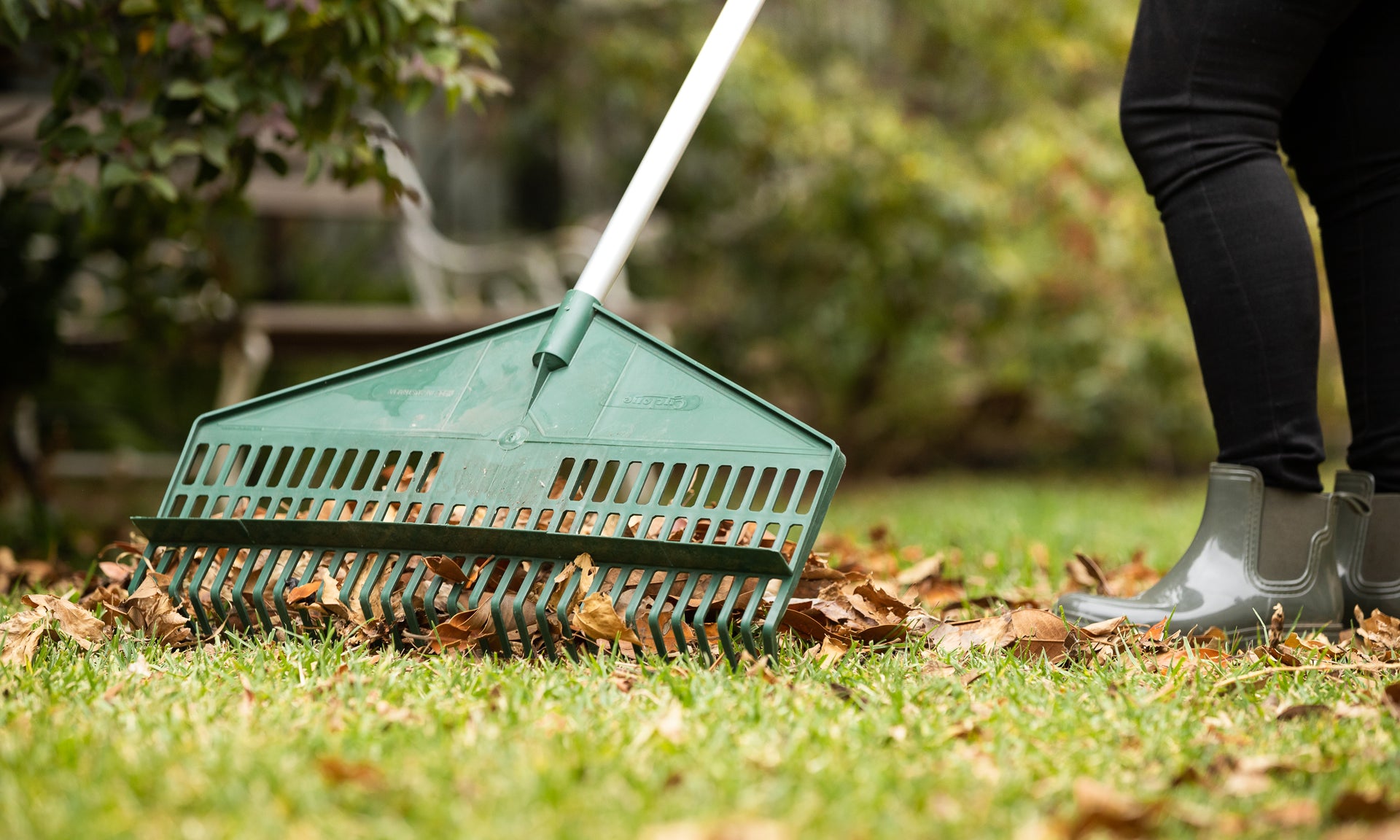
This is the most common autumn symptom, and the fix is a flexible-head rake. Left on the lawn, leaves smother the turf, and on paths they turn into a slippery mess. Rake them up and add them to the compost. Flexible tines glide over grass and garden beds without tearing them up, which is exactly what a rigid landscape rake will do if you use it here instead.

  • Extra Wide Leaf Rake: a 760mm wide polypropylene head covers large areas quickly. The unique tine shape collects 45% more leaves per sweep*, and the lightweight aluminium handle is easy on your back.
  • 22 Tine Steel Springback Leaf Rake: spring-tine steel construction that flexes around obstacles and springs back into shape.
  • 22 Tine Steel Fan Rake: a classic fan-shaped head for everyday leaf and clipping clean-up.
  • Fan Rake: a hand-held fan rake, ideal for small space gardening and tidying corners of the yard.
  • Rake & Scoop: a 610mm 2-in-1 for raking and scooping leaves, with a UV protected head and a lightweight aluminium handle.
  • Prefer to lift as you go? Browse our Leaf Scoops for efficient clean-up during big garden clears.

Loose soil, gravel, sand or mulch that needs levelling or spreading

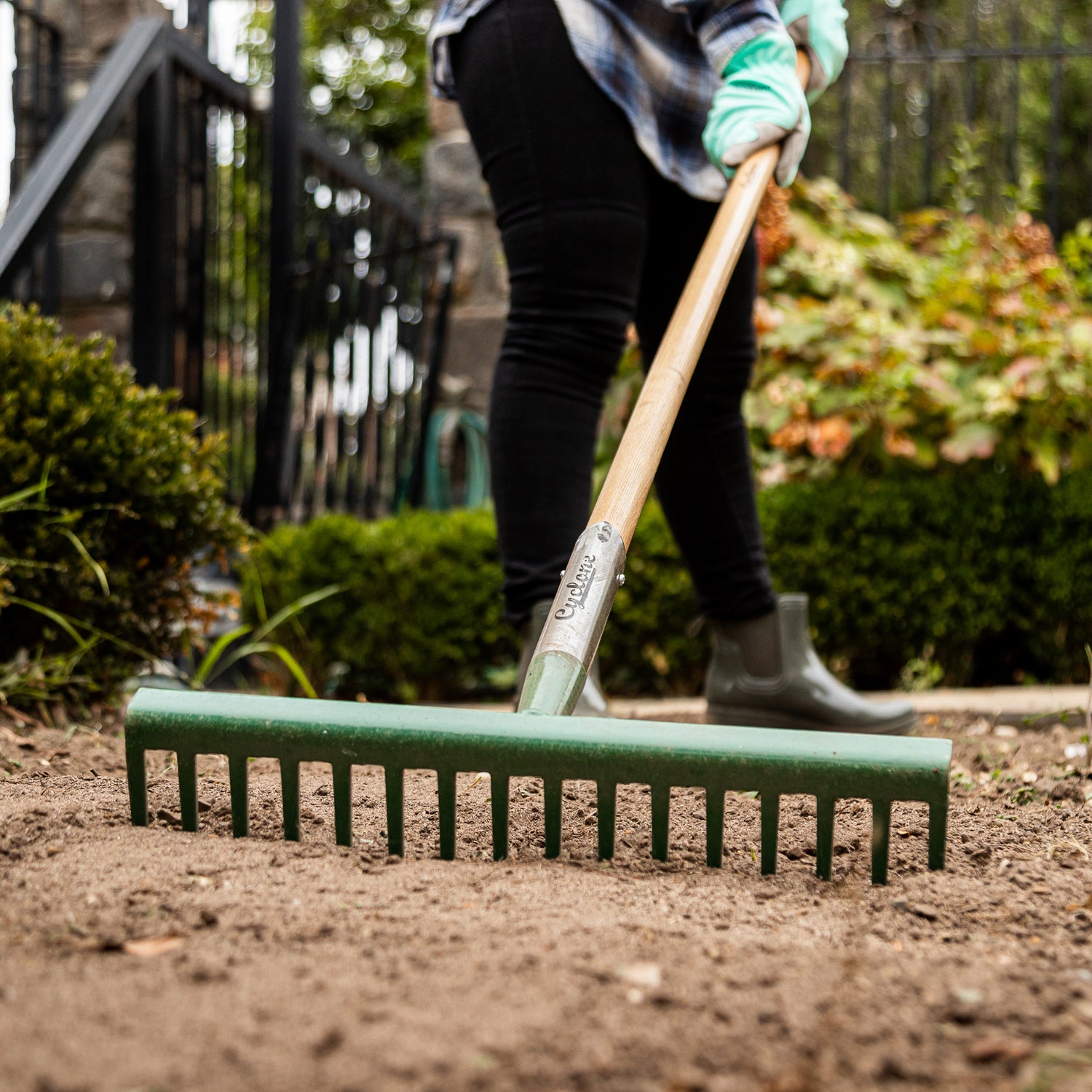
If you’re looking at a driveway with gravel scattered unevenly, a garden bed that needs mulch spread flat, or soil that needs levelling before turf goes down, you need a rigid-head rake. You’ll see this style sold under several names such as landscape rake, bow rake, ground rake, soil rake or gravel rake, but they all do the same job: the straight, closely-spaced tines and reinforced rear edge handle tougher material than a leaf rake can, including gravel, soil, stones, mulch, compost and garden waste.

  • 16T Landscape Rake: 16 tines, a long ash hardwood handle with a clear lacquer finish to prevent splinters, and a 90-degree rear edge reinforcement for extra strength when spreading materials.
  • 14T Landscape Rake: a slightly narrower head for lighter landscaping jobs and tighter garden beds, while keeping the same rigid-tine design for soil, gravel and mulch.
  • Long Handle Fibreglass Landscape Rake: A durable fibreglass handle option ideal for levelling and spreading stones in both wet and dry weather conditions.
  • 36 Tine Aluminium Landscapers Rake: a wider aluminium head for covering large areas quickly, built for landscapers and bigger properties.

A bed or lawn that needs a fine, even surface for seed

If you’re cultivating, aerating or scarifying soil in preparation for planting, and the surface is still lumpy or compacted, a nail rake is what you’re after. The pointed, nail-like tines penetrate the soil so each stroke creates seed furrows ready for sowing lawn seed or the new season’s crop.

  • 16T Nail Rake: 16 sharpened tines for greater soil penetration and a long ash hardwood handle for superior comfort and control. It also rakes soil, stones, leaves and garden debris.
  • 14T Nail Rake: a narrower head for smaller garden beds and more precise planting preparation.

 A lawn that feels spongy, patchy or won’t drain properly

That’s usually thatch, a layer of dead grass and organic matter that builds up at the base of your lawn. Left too thick, it stops water and nutrients reaching the roots. Mow first, then work over the lawn with a thatching rake. If the soil underneath is compacted rather than thatchy, a lawn aerator may be the better tool.

Thatching Rake: an extra-long timber handle, an adjustable angle to suit all lawn types, and durable zinc-plated steel tines. 

Debris caught under hedges, in courtyards or other compact spaces 

A full-width rake won’t fit under a hedge or into a paved courtyard corner. This is where a narrower, purpose-built tool is useful.

A rake that keeps giving up under daily, heavy use

If you’re on the tools every day rather than a few weekends a year, a standard rake wears out fast. 18T Trade Rake: built for frequent, heavy-duty use, the rake of choice for regular professional trade work.

Your rake keeps bending, cracking or wearing out

The right material depends on the job. Cyclone’s landscape, nail and thatching rakes use metal heads with timber or fibreglass handles, chosen for strength for tasks like spreading gravel, breaking up compacted soil or working thatch out of a lawn. For leaves and lawns, the Extra Wide Leaf Rake has a lightweight polypropylene head, which is gentler on turf and easier on the arms over a big autumn clean-up.

Frequently Asked Questions

I don’t know which rake I need, where do I start?

Look at what’s actually in your yard: leaves and clippings point to a leaf or fan rake; loose soil, gravel or mulch points to a landscape rake; a lawn that needs seed bed prep points to a nail rake; thatch build-up points to a thatching rake.

I’ve got a mix of leaves, clippings and light debris, what rake handles that best?

A leaf rake. Its wide, fan-shaped head and flexible tines gather leaves, grass clippings or light debris without damaging turf or garden beds. If you’re moving soil, gravel or mulch instead, switch to a landscape rake, its rigid tines are built for that heavier job.

My rake keeps bending or wearing out fast, is metal or plastic better?

Both metal and plastic rakes are designed for different gardening tasks. Steel and aluminium heads are ideal for heavier jobs like spreading gravel, levelling soil and removing thatch, while lightweight polypropylene heads are well suited to gathering leaves, grass clippings and light garden debris. The best choice depends on the job you're tackling.

My driveway or garden has loose gravel, mulch or compost scattered around, what’s the best rake?

A landscape (rigid-head) rake, sometimes called a bow rake, ground rake or gravel rake. The straight, closely-spaced tines and reinforced edge are built for levelling and spreading tougher material than a leaf rake can handle. It spreads mulch, compost or gravel evenly, loosens the top layer of soil and creates a level surface ready for planting or laying lawn seed.

My artificial turf has leaves or debris on it, can I use a regular rake?

A soft, flexible-tine leaf or fan rake can lift light debris off synthetic turf without damaging the backing. Avoid rigid nail or landscape rakes here, their tines can tear the backing, and check your turf manufacturer’s care guidance first.

When should I rake my lawn and when should I use other tools?

Raking is ideal for surface-level maintenance like removing fallen leaves, grass clippings and light debris. For aerating, planting or deep soil work, garden hand tools such as trowels, forks or cultivators are often more effective.